
Edinburgh, Scotland’s capital, is a city rich in history, culture and natural beauty. As someone who’s lived in Edinburgh all my life, I think it’s the best city to live in the UK. One particular reason I love living in Scotland is that wild camping is easy and safe to do locally.
Living in Edinburgh means dealing with tourists year-round, especially during the Edinburgh Festival in August, when the Royal Mile gets crowded and everything is more expensive. I’m glad to be working remotely from home, so I can avoid town quite easily. Before Covid hit, I was office-bound Monday to Friday for too many years.
No matter where you live in Edinburgh, you’re always near a good local walk through a wooded area. We also have hills right in the city, like Arthur’s Seat and Blackford Hill, which give you scenic views for a small climb. For anyone after a small adventure and some quiet away from the city noise, wild camping around Edinburgh is a proper escape. From here you’re rarely more than a 30-minute drive from a good hike or a wild camping spot, which is one of the beauties of living here.

What Is Wild Camping?
Wild camping is setting up camp in remote, non-designated areas, away from campsites and their facilities. It lets you settle into nature properly, with the quiet and solitude that come with being off the beaten path.
In Scotland, wild camping is legal. The Land Reform (Scotland) Act 2003 gives everyone access rights to most land, and those rights include lightweight camping on unenclosed land, in small groups, for two or three nights in any one place. The Scottish Outdoor Access Code sets out how to do it responsibly, and in short it means leave no trace. I’ve covered the detail in my guide to Scottish wild camping laws.
Coming with a car or campervan? Access rights cover camping on foot, not vehicles. Most coastal areas near the city don’t allow overnight stays in campervans, and many car parks have height barriers of around 1.9 to 2.1 metres. With a tent it’s a lot easier: park in a nearby town or village and walk 30 minutes to an hour to find a peaceful spot.
The Best Spots for Wild Camping Around Edinburgh
| Spot | Where | Best for |
|---|---|---|
| Pentland Hills | South of the city | Hills, reservoirs, city views |
| East Lothian coast | East of the city | Beach camps, sunsets |
| Roslin Glen | 7 miles south | Woodland by the river |
| Beecraigs | Near Linlithgow | Woodland and a loch |
| Cramond Island | 1 mile offshore | A tidal adventure |
1. Pentland Hills Regional Park (South Edinburgh)

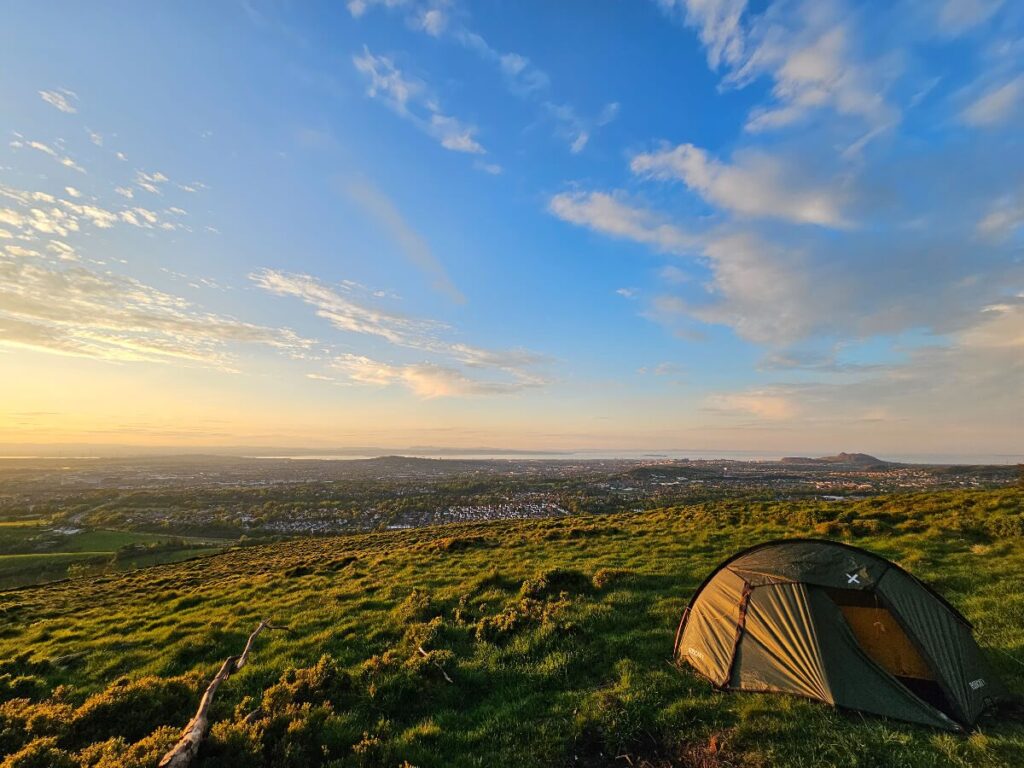
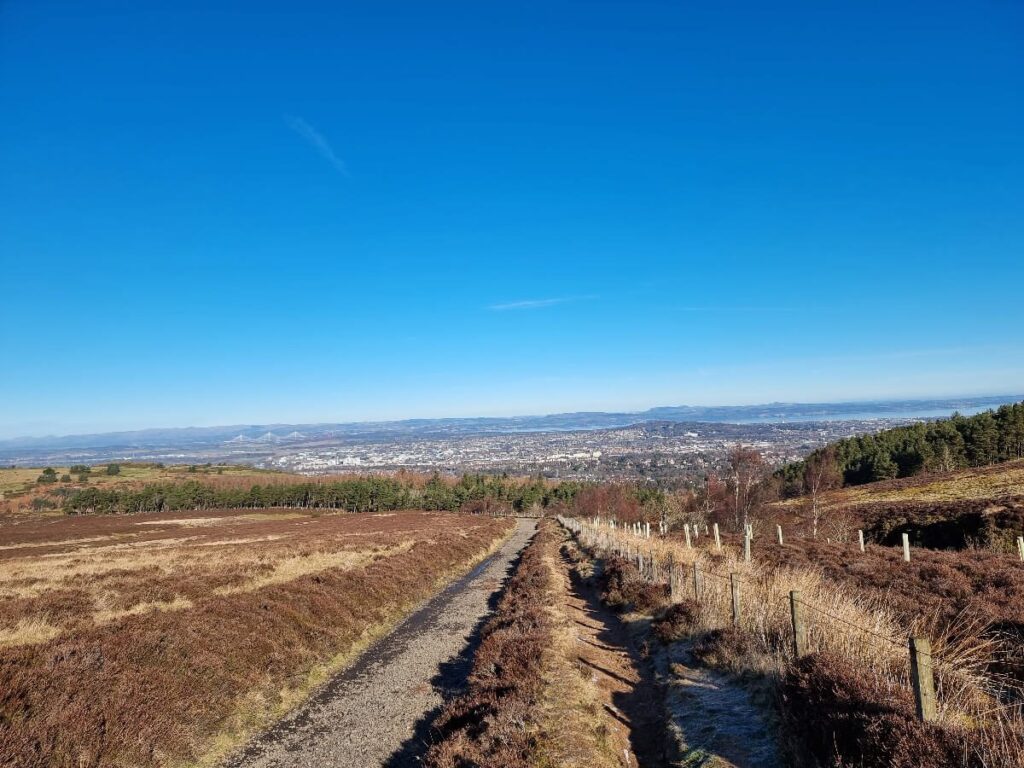
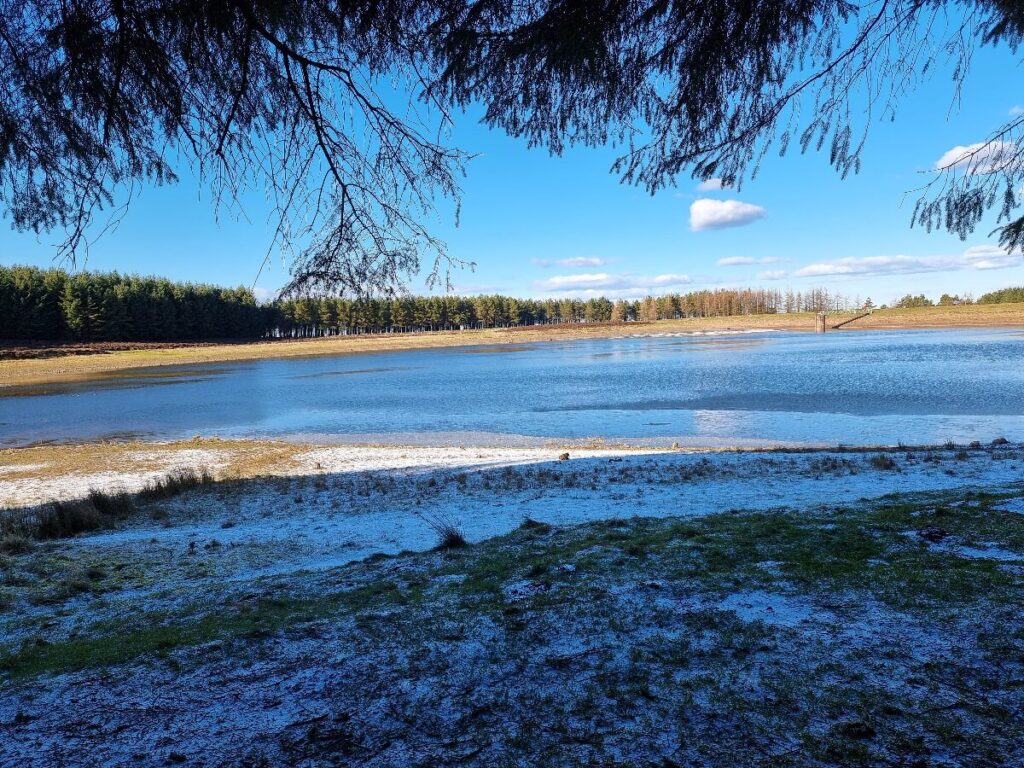
The first place I’d recommend for wild camping around Edinburgh is the Pentland Hills, to the south of the city. The Pentlands are my favourite and most local spot for a quick night away. I can find the perfect elevated spot overlooking the city within an hour’s hike from my home, or go slightly further and reach the nearest reservoir.
The Pentlands have hundreds of good camping spots around the woodland and near the many reservoirs. If you don’t mind a windy night, go ahead and camp up near one of the summits, or find a cosy spot halfway up with great views.
Popular spots include the Bonaly, Threipmuir and Harlaw reservoirs, where you can be pitched within 30 minutes of the nearest designated car parks.
If you just want a random wild camp near the city, the Pentlands are the easiest option by far. Keep an eye on the fire warning levels posted around the park, and stick to the Scottish clean-up rule: take everything home with you and leave the spot as you found it.
Worth knowing: the City of Edinburgh Council’s park rules prohibit camping and fires within a mile of a public road on land it manages, and that takes in Harlaw Reservoir and most of Bonaly Country Park. In practice, camping there has long been tolerated as long as you leave the spot tidy and don’t disturb anyone. The Pentland Hills Regional Park camping page has the current guidance.
2. East Lothian Coastline (Yellowcraig and North Berwick)

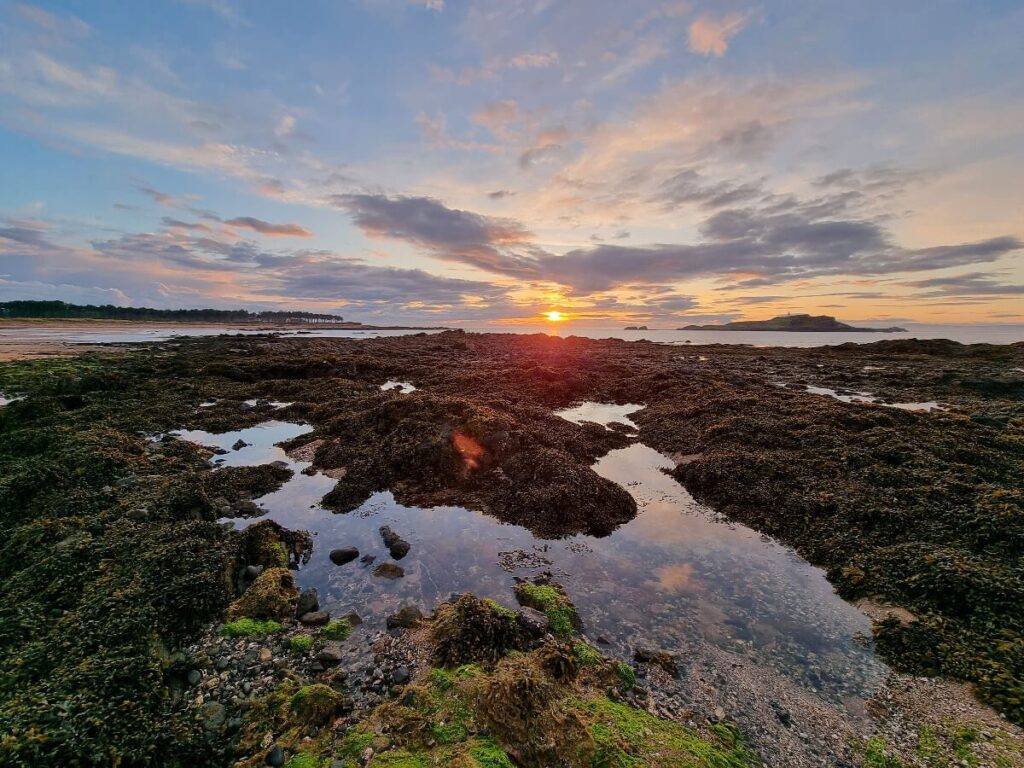
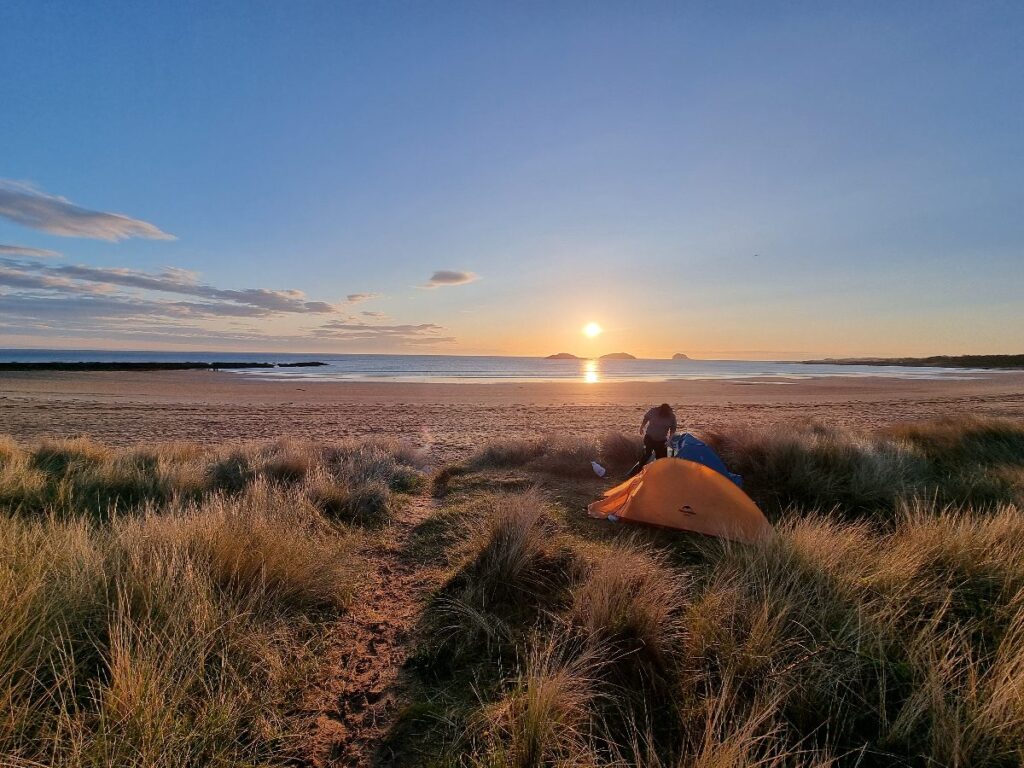
For those who prefer coastal camping, the East Lothian coastline has stunning beaches and some good dramatic cliffs. Spots like Tyninghame and Yellowcraig give you views like the sunset above, which I took at Yellowcraig. Falling asleep to the sound of waves and waking up to a seaside sunrise is really worth it, and a nice change from the usual green hills.
Parking: East Lothian Council bans overnight parking at its coastal car parks from 11pm to 4am, April to September, so on a summer camp you can’t leave the car beside the beach. Yellowcraig, Dirleton and Shore Road in Dunbar do have a few paid overnight bays, but those are for motorhomes.
That makes any coastal camp quite difficult to plan. Your best bet is to park in a nearby town and walk 30 minutes to an hour to a great spot. For Yellowcraig, park in North Berwick and it’s about an hour’s walk.
3. Roslin Glen (South Edinburgh)

Roslin Glen is about seven miles south of the city centre and is another common camping spot, more so for locals. The glen’s ancient woodland, with the historic Rosslyn Chapel nearby, gives it a more mystical atmosphere, and camping here lets you explore the woods along the River North Esk. Being ancient woodland, it’s one of the places to keep any fire well out of the trees.
4. Beecraigs Country Park (West Edinburgh)

Beecraigs Country Park is about 20 miles west of Edinburgh, just south of Linlithgow. The park has a mix of woodland, open country and a loch, which makes it an easy camping spot for anyone in the area. If you’d rather have toilets and a shower, there’s a council-run caravan and camping site in the park, bookable online, with grass tent pitches from April to October. If you’re wild camping, keep to the quieter, more remote parts of the park.
5. Cramond Island (About a Mile Out to Sea)

If you’re brave enough, consider camping out on Cramond Island, about a mile out in the Firth of Forth. It’s a tidal island you can only walk to at low tide, so checking the crossing times is crucial to avoid being stranded, and that’s part of the experience with this one. Once the tide is in, you’re staying until it goes back out.
Tide times: the safe crossing times are posted at the causeway, or text CRAMOND to 81400 for the day’s times. If the water is already rising, don’t try to wade back. Call 999 and ask for the Coastguard.
The Magic of Wild Camping

The joy of wild camping is the freedom it gives you. You can set up camp almost anywhere, from the bottom of a hill to the top of a mountain, whether you prefer a secluded forest or a summit. For quick getaways, the spots around Edinburgh are ideal for a one-night escape, or two if you need a bit more space from the city noise. Plan ahead, respect the environment and leave no trace.
For something longer, heading further north into Scotland opens up even more spectacular camping, like my five days on the West Highland Way. That takes more preparation and planning, including extra gear for a longer stay.
Campfires and Wildfire Risk
During the rare times Scotland gets good hot weather, the risk of wildfires goes up fast. Check the wildfire danger assessments before you head out, and when the risk is high, don’t light a fire at all. The Pentland Hills park asks for no campfires or barbecues during those spells.
Whatever the weather, keep fires away from trees and off peaty ground, surround them with stones to keep them contained, and remove every trace of the fire before you leave.
Tips for a Successful Wild Camping Trip
- Plan ahead: research your chosen area and make sure you have the right equipment for the length of your stay. Check the weather forecast and be prepared for sudden changes.
- Leave no trace: carry out all your rubbish, keep any fire small and leave no sign of it, and respect wildlife and other visitors.
- Stay safe: let someone know your plans and expected return time. Bring a fully charged mobile phone and consider carrying a portable charger. You should get signal within a short walk of every place in this post.
- Respect local rules: wild camping is generally permitted, but some areas have their own restrictions, like the council rules near the Pentlands reservoirs, or the camping management zones in Loch Lomond and The Trossachs National Park, where you need a permit from March to September. Look out for signs and follow them.
- Pack the essentials: most importantly a good tent, sleeping bag and sleeping mat for a dry night’s sleep, plus layers and waterproofs for the changeable Scottish weather.
I hope this post was useful, and you enjoy your upcoming camping trip. Catch you next time!


Leave a Reply