
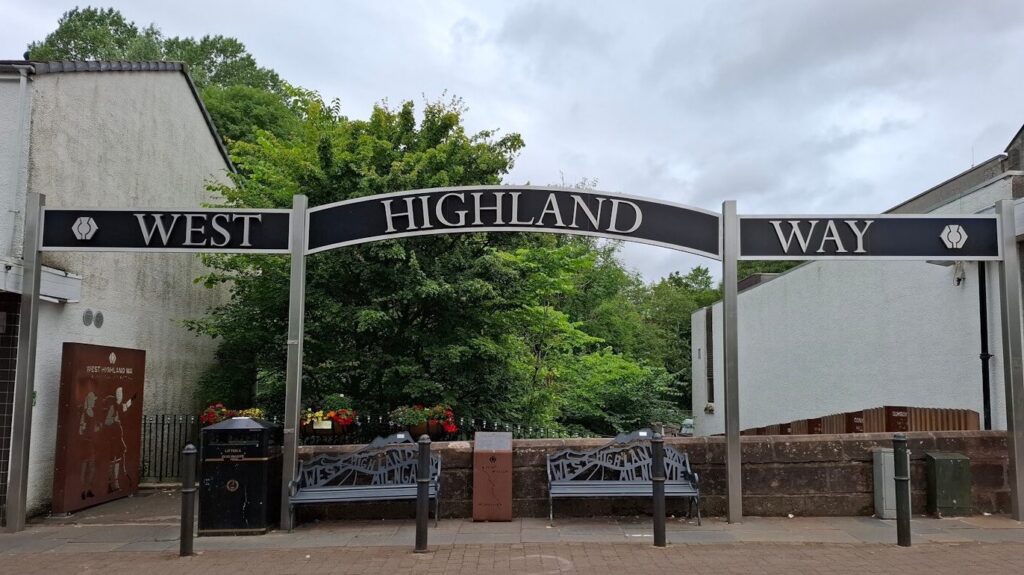
People ask if the West Highland Way is hard. Physically it is, technically it isn’t, and how hard it feels depends almost entirely on how many days you give it and what’s on your back. I’ve done it both ways. An attempt in April 2024 ended at Tyndrum. Four months later I went back and walked the full 96 miles from Milngavie to Fort William in four and a half days, leaving Edinburgh very early on the Monday and arriving in Fort William for lunch on the Friday. Most people take seven or eight days. I like to push myself, so don’t take my pace as the plan.
So this is what I’d want someone to know before they book: the route, what actually makes it hard, how many days to take, and what to do if it starts going wrong.
The Route at a Glance
The West Highland Way is Scotland’s best known long-distance walk. It runs from Milngavie on the edge of Glasgow up to Fort William at the foot of Ben Nevis, taking you along Loch Lomond, across Rannoch Moor and over the Devil’s Staircase into the Highlands proper.
- Distance: 96 miles (154 km)
- Start: Milngavie, just north of Glasgow
- Finish: Fort William, below Ben Nevis
- Typical time: 7 to 8 days for most walkers, though it can be done faster
- Terrain: woodland track, old military road and rough loch-side path, well signed the whole way, with no scrambling or technical ground
- High point: about 550 m, on the Devil’s Staircase
- Camping: wild camping is possible along much of the route, with rules to know around Loch Lomond
Popular Doesn’t Mean Easy
This is a serious trail, and it’s also one of the most popular in the country. By the end of 2019 over 40,000 people a year were walking the whole thing, up from over 15,000 in 2004, according to the West Highland Way’s 40th anniversary timeline. It gets more attention than any other long trail in Scotland, so a lot of beginners try it first, when an easier long-distance trail would be great practice. I’d totally recommend that if you’ve never done a multi-day walk.
If this is still the one you want to start with, you can make it a lot easier. Stay in hotels, B&Bs and hostels along the route instead of camping, use a bag transfer service so you only carry a day pack, and give yourself more days than I did.
The Time I Failed It
I set off in April 2024 with mates and got about 84 km, as far as Tyndrum, before it ended. It was out of season, the weather was against us and there was snow, and my bag was too heavy, which was one of the main reasons I stopped. I went back that July with a lighter pack.
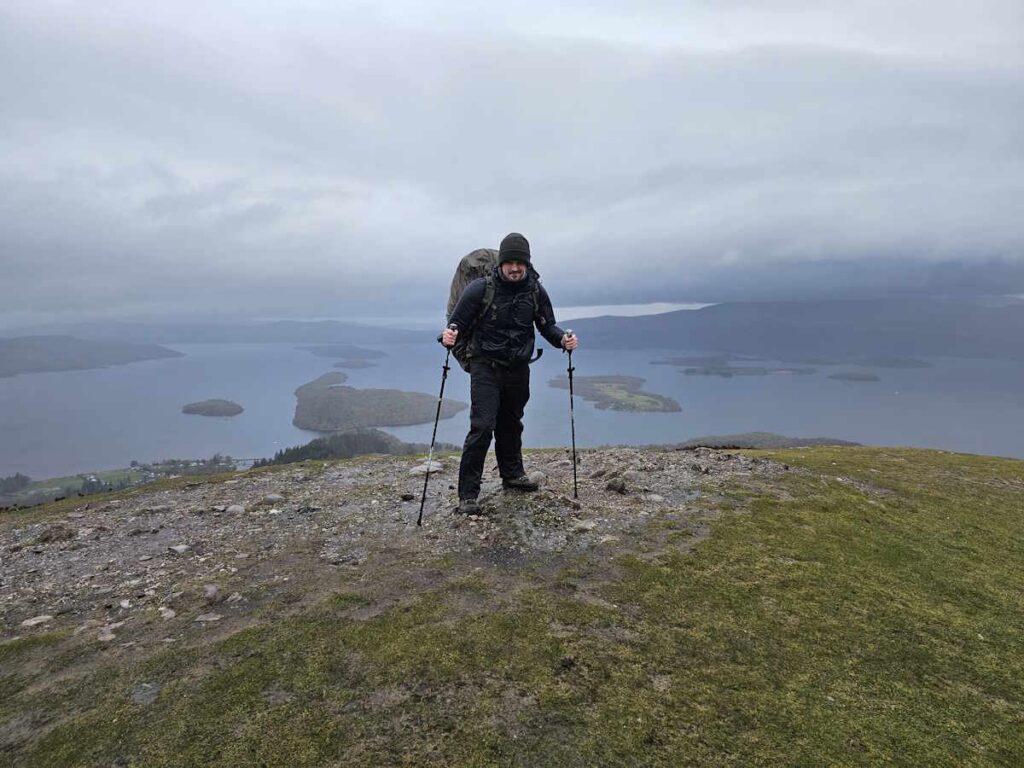
Long trails were still new to me, and it was an amazing trip anyway. I remember waking up in a tent near Conic Hill, having a coffee over my map while everyone else was still asleep, then getting to the top in wind so strong it was hard to stand. We had a night in the Inversnaid Hotel, and my last night was at Tyndrum Holiday Park, which I’d still recommend. Failing wasn’t an issue, and I’d say that to anyone who’s worried about it. Four months later I passed the Inversnaid Hotel before lunchtime on Day 2, then walked through Tyndrum further north than I’d ever been, and it felt like a small win both times.
The Walk Itself Isn’t Technical
There’s no scrambling, no exposure, no navigation nightmare. The path is well signed the whole way, and for long stretches it’s woodland track and old military road. If you can walk for hours on uneven ground, you can physically do the West Highland Way. It isn’t Ben Nevis or the Cuillin. Nobody needs ropes or mountaineering skills.
What makes it hard is not the difficulty of any single step. It’s the accumulation, doing it again the next day and the day after that, with a pack on, whatever the weather is doing.
What Actually Makes It Hard
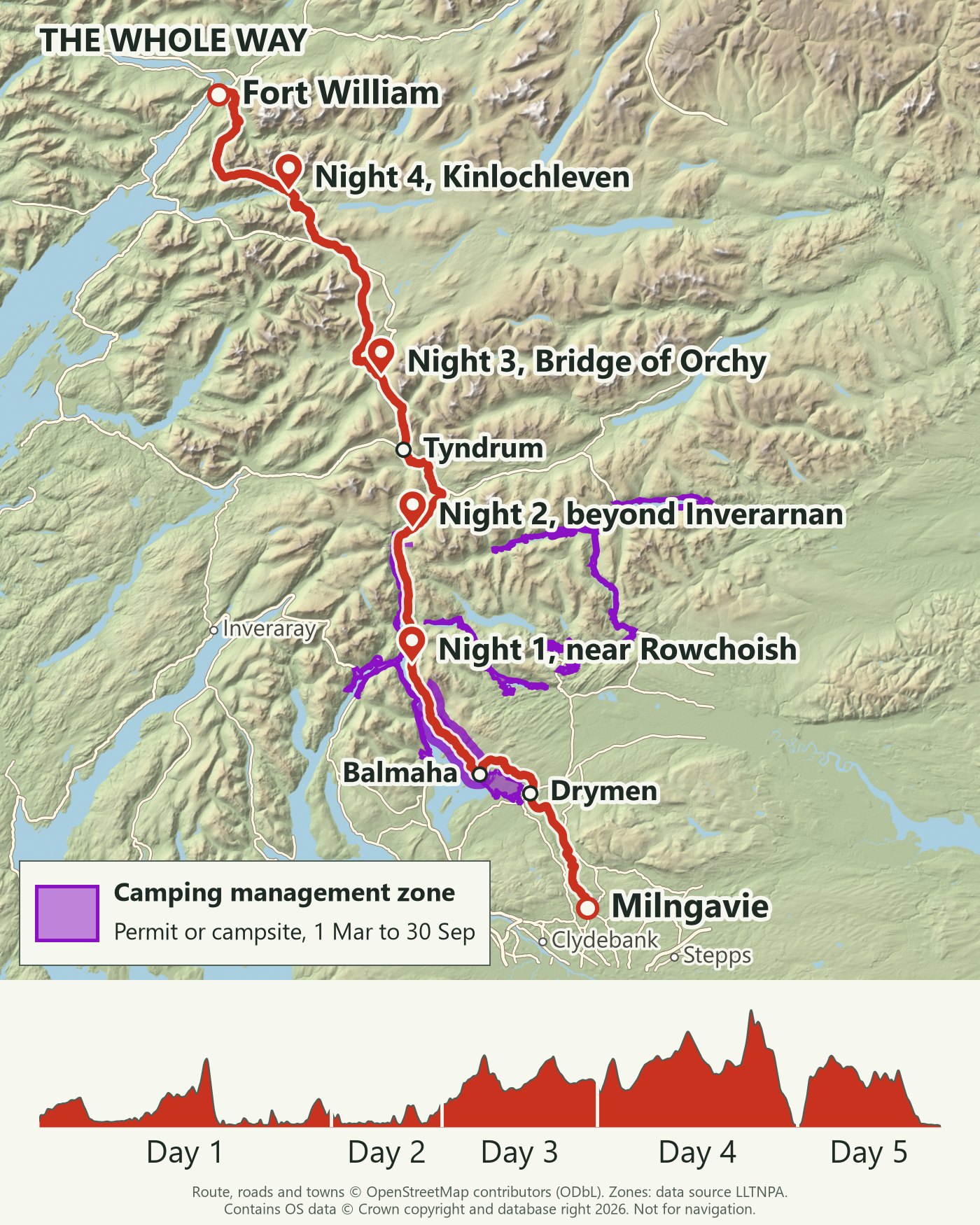
The daily distance. This is the big one, and it’s the lever you control. On my five day plan, Day 1 was around 45 km and over 75,000 steps, from Milngavie to beyond Rowardennan. I started at the obelisk at 8:30am full of energy and finished pitching my tent past midnight, between 12 and 1am, untangling guy lines by headtorch because I hadn’t packed the tent properly after the last trip. Consequences feel very theoretical on Day 1. Spread the same ground over seven or eight days and no single day breaks you like that.
The Loch Lomond section. The east side of Loch Lomond is the part people underestimate. It’s slow, rooty, up and down over rocks and tree roots for miles, and your pace drops right off. On my Day 2 it looked like a steadier day on paper, but it’s one of the most demanding stretches of the whole trail even though it barely gains height. Fit walkers get frustrated here because the miles just won’t come.
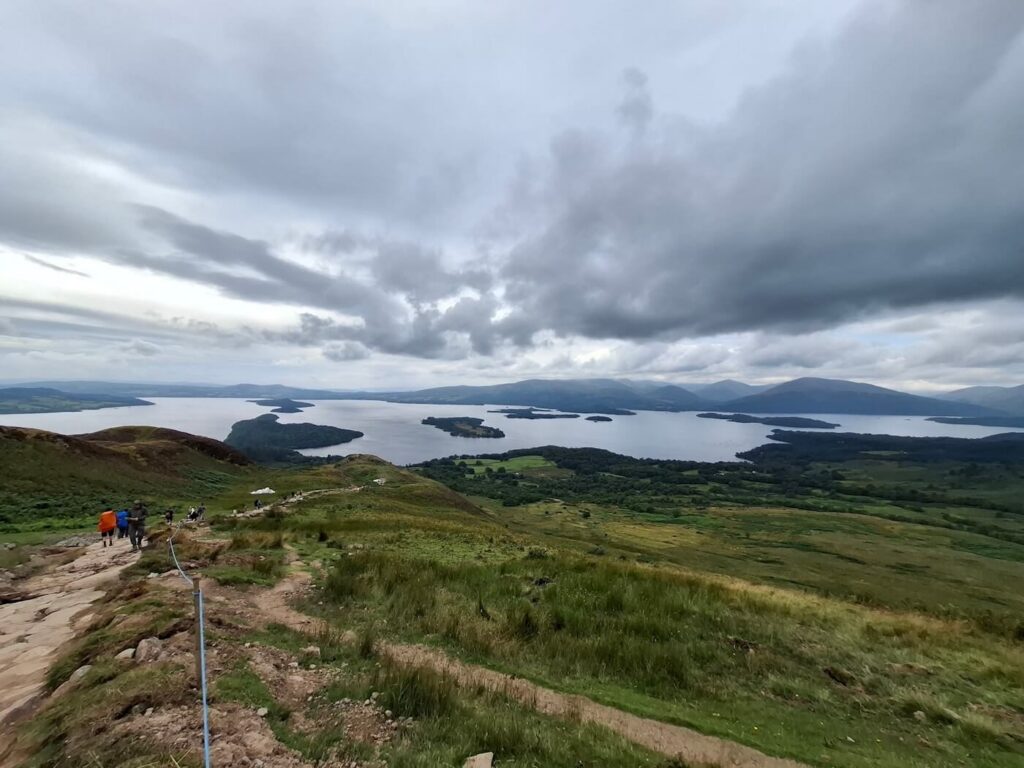
The pack. Wild camping the route means carrying your tent, sleeping bag, mat, stove and food, and that weight changes everything on a long day. It’s a big part of why I failed. If you’re staying in B&Bs and using a bag transfer service, the walk gets noticeably easier, because you’re only carrying a day pack.
The weather. Scotland does what it wants. You can get all four seasons before lunch, and the exposed ground over Rannoch Moor and the Devil’s Staircase gives you nowhere to hide when it turns. I got a good crossing of Rannoch Moor on Day 4, with the cloud lifting and a light wind, and I could still see how quickly it would become a slow, draining slog in heavy rain.
Your body, day after day. The first couple of days are an adjustment even if you’re fit, and blisters and aching feet are the most common reason people struggle, not fitness. By the end of Day 4 I was lying in the tent in Kinlochleven with my legs pulsing, and it took me two hours to get to sleep. In the morning I seemed fine, and by then the easiest way home was just going forward.
How Many Days Should You Take?
This is the single biggest decision for how hard it feels.
Shorter days, time to enjoy the scenery, room for a rest. This is what most first timers should do.
A solid middle ground if you’ve got decent hill fitness.
Monday morning to Friday lunchtime. Longer days, fewer stops, very little room for error. It turns the walk into an endurance challenge rather than a relaxed long-distance stroll. I like to push myself and I don’t regret it, but I wouldn’t recommend it as a first long-distance hike.
Whatever you pick, add a buffer day to your plan in case you’re going slower than expected. If this is your first multi-day walk, give yourself more days than you think you need.
If It Starts Going Wrong
Don’t be afraid to end your trip if there’s a real problem, like an injury or the weather turning severe. I’ve done it and I went back. On Day 3 I walked most of the day with two people from Glasgow doing the Way for charity, who had set off as a group of three until one of them had to bail with a knee issue. The other two carried on.
Ending it isn’t the only option either. You can rest up in a hotel for the respite, to recover and to dry your gear if needed. There are hotels right on the route at Rowardennan, Inversnaid, Bridge of Orchy, Inveroran and Kingshouse. Try to book as early as possible during summer and peak season.
How Fit Do You Need to Be?
You don’t need to be an athlete. You need to be comfortable walking for six to eight hours on consecutive days. The best training is walking, ideally with the pack you’ll actually carry, on hills, back to back at weekends so your body learns to recover overnight. If you can do a couple of long back-to-back hill days without falling apart, you’re ready for the standard itinerary. Being lighter helps more than being strong, because this is endurance, not power.
Wild Camping the Way
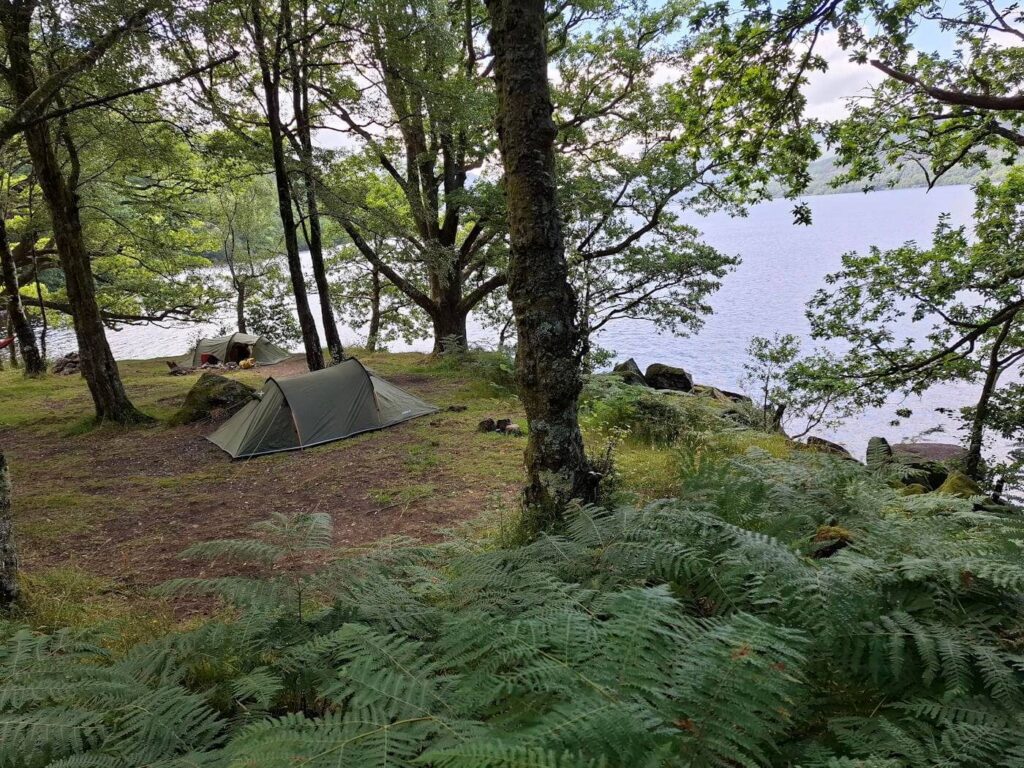
Carrying your tent gives you freedom and keeps costs down, but there’s one rule that catches people out. Parts of Loch Lomond and the Trossachs National Park are Camping Management Zones, and between March and September you need a permit or you have to use a designated site. That zone covers exactly the stretch a lot of walkers want to camp on, so plan your stages around it or book a pitch. It’s why I pushed on past Rowardennan until midnight on Day 1. I’ve covered the detail in my Scottish wild camping laws and access guide.
What to Carry
Keep the pack light. Big torches, saws, axes and books sound useful and become a burden fast. Since failing, I’ve learned to carry only what’s essential and needed, and to gear up over time so the tent, sleeping bag, mat and everything else are as light as they can be. As a guide, keep your tent under 2kg and your sleeping bag under 1kg if you can, and a sleeping mat can be 0.5kg. If you’re heading out in winter your sleeping bag might be 2kg, which is worth it for a good night’s sleep. This was my core kit when I finished it:
- Pack: SKYSPER 60L, big enough for camping kit without tempting you to overpack.
- Tent: OEX Bobcat 1 at around 1.7 kg, a light one-person shelter.
- Sleeping bag: Chimera EV 500 down bag at about 1.1 kg, packs tiny. My review.
- Map: a paper map of the route, because phone signal drops out for long stretches.
- Feet: broken-in boots and good socks, which prevent the single most common problem on the trail.
Don’t carry five days of food. You pass shops, pubs and cafés most days, and a week of supplies is dead weight. I had a bacon roll and coffee in Glasgow before I started, and a pint at Balmaha and again at Rowardennan. Just don’t count on every kitchen being open: at Bridge of Orchy they weren’t serving food when we arrived, so that evening was nuts and a pint. Everything I take on longer trips is on my Hiking Gear page.
Some links above are Amazon affiliate links. They cost you nothing extra and I only link gear I’ve actually carried.
When to Walk It
Most people walk the West Highland Way between April and October. Late spring and early autumn are the sweet spot: enough daylight for long days, milder weather, and less of the summer midge, which can be fierce on the loch-side and low ground in high summer. If you walk it in midge season, pack repellent and a head net. Here’s how I deal with midges.
The Walk, Day by Day
I wrote up the whole thing as I walked it. Even if you’re taking longer, these cover the ground, the terrain and where I camped:
- Day 1: Milngavie to Rowardennan, the long opening day, over Conic Hill with the first big view of the loch.
- Day 2: Rowchoish to beyond Inverarnan, the slow, rooty east shore of Loch Lomond.
- Day 3: Beyond Inverarnan to Bridge of Orchy, opening out into wilder, bigger country.
- Day 4: Bridge of Orchy to Kinlochleven, across Rannoch Moor and over the Devil’s Staircase.
- Day 5: Kinlochleven to Fort William, the last and shortest day, to the finish line.
So, Is It Hard?
Physically demanding, yes. Technically hard, no. Walk it over a week with a light pack and it’s a brilliant, achievable introduction to long-distance hiking. Compress it into four and a half days carrying everything, and it becomes a proper endurance test that will find every weak point in your planning. It found mine in April. Reaching the finish line in Fort William that August brought proper relief, more so for having failed it before, and if your attempt ends early, you can always come back.
Is it worth it? Yes, completely. However you do it, the hardest part is committing and settling into the rhythm. Once that clicks, the miles take care of themselves.
Leave a Reply