
Fort William daylight
- Mid-June17h 48m
- Mid-April14h 15m
- Mid-October10h 26m
- Mid-December6h 49m
The West Highland Way runs 96 miles from Milngavie, on the edge of Glasgow, to Fort William. How much of it fits into a day depends as much on daylight as on legs, and in Scotland that swings a long way through the year. In mid-June Fort William gets 17h 48m of daylight. In mid-December it gets 6h 49m.
Here is the daylight at the finish, month by month, with what it means for planning a walking day. The figures are worked out from sunrise and sunset times with the same NOAA solar equations as my UK daylight post, for 2027. They barely move from one year to the next.
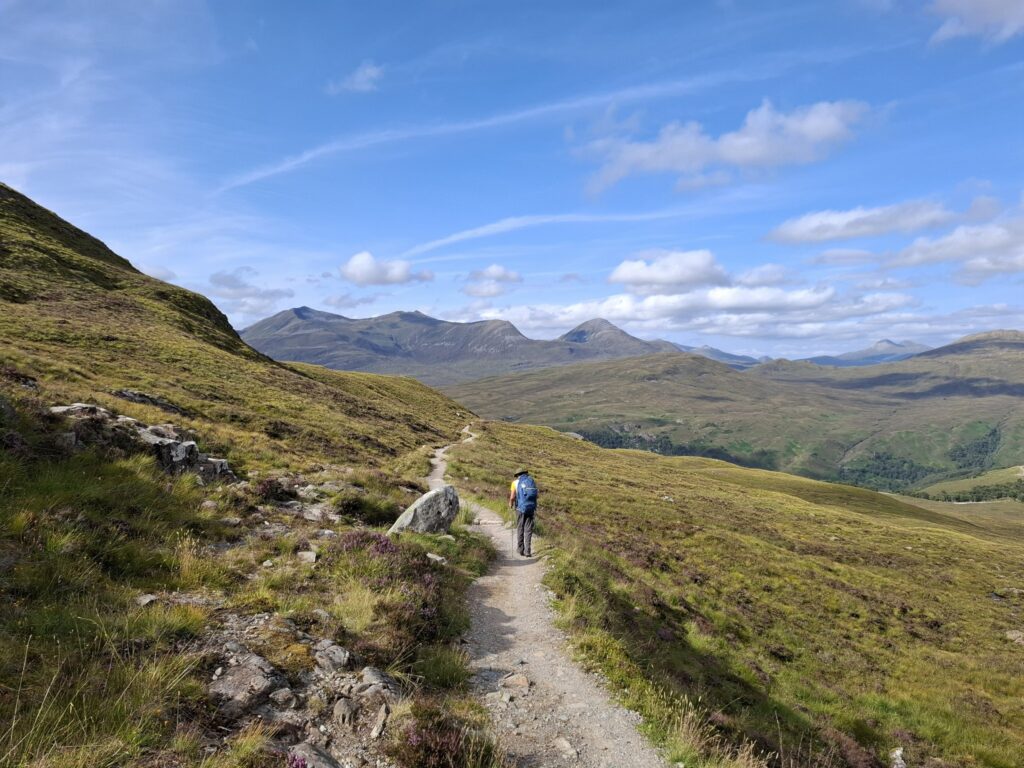
Sunrise and Sunset, Month by Month
Times are UK clock time at Fort William on the 15th of each month. “Light until” is the end of civil twilight, when the Sun is 6 degrees below the horizon, which is roughly when you would want a head torch out.
| 15th | Sunrise | Sunset | Daylight | Light until |
|---|---|---|---|---|
| Jan | 8:47am | 4:13pm | 7h 27m | 4:59pm |
| Feb | 7:49am | 5:21pm | 9h 33m | 6:01pm |
| Mar | 6:37am | 6:23pm | 11h 46m | 7:01pm |
| Apr | 6:14am | 8:29pm | 14h 15m | 9:10pm |
| May | 5:04am | 9:31pm | 16h 28m | 10:24pm |
| Jun | 4:27am | 10:15pm | 17h 48m | 11:22pm |
| Jul | 4:49am | 10:02pm | 17h 13m | 11:01pm |
| Aug | 5:48am | 9:01pm | 15h 13m | 9:45pm |
| Sep | 6:51am | 7:40pm | 12h 49m | 8:18pm |
| Oct | 7:53am | 6:19pm | 10h 26m | 6:57pm |
| Nov | 8:00am | 4:09pm | 8h 09m | 4:52pm |
| Dec | 8:51am | 3:40pm | 6h 49m | 4:29pm |
Darker = less daylight
The start of the route sees almost the same day. Milngavie is further south and east, so in December its day is about 6h 58m against 6h 45m at Fort William, and in June it is 17h 36m against 17h 50m. The difference is never more than a quarter of an hour.
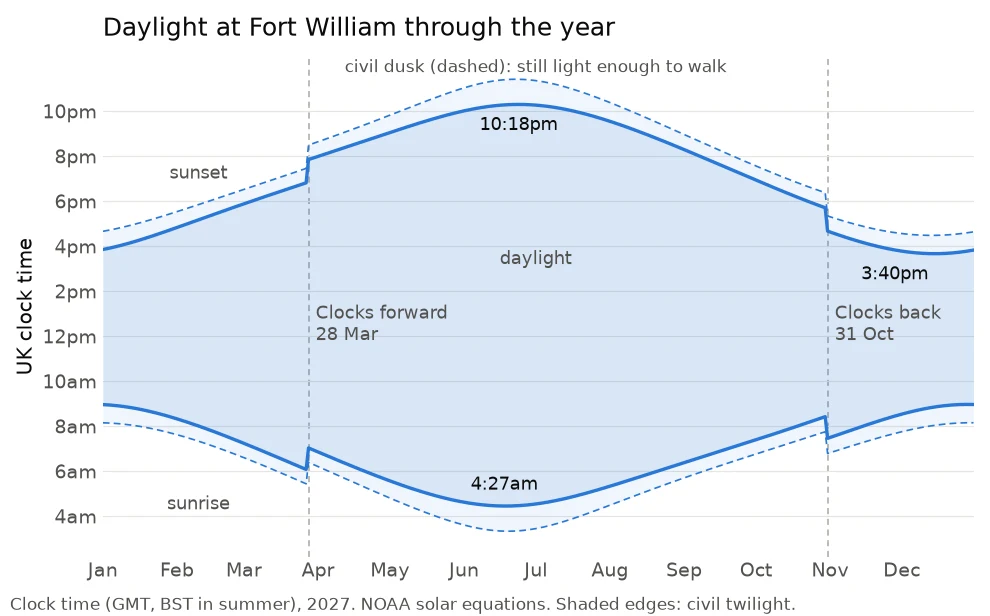
What It Means for a Walking Day
April and May
Long days arrive fast. Mid-April gives 14h 15m from a 6:14am sunrise to an 8:29pm sunset, and by mid-May it is 16h 28m. Most of the gain is in the evening once the clocks go forward, so late finishes stay in daylight.
June and July
Around 17h 48m of daylight, with light until about 11:22pm in mid-June. Time is rarely the limit in midsummer, legs and campsites are. The Sun never gets more than about 10 degrees below the horizon here at midnight in June, so it never gets fully dark.
August and September
Still generous, but shrinking quickly. Mid-August gives 15h 13m, mid-September 12h 49m, with sunset at 7:40pm. A late start that worked in June can mean the last few miles in the dusk by September.
October to March
Short days set the plan. Mid-October gives 10h 26m with sunset at 6:19pm, and mid-December only 6h 49m, from 8:51am to 3:40pm. A winter walk needs short stages, an early start and a head torch in the bag from the first day.
Camping and the Calendar
Daylight is not the only date that matters if you wild camp. From 1 March to 30 September the Loch Lomond and The Trossachs camping management zones need a permit or a campsite, and the route passes through them on the first two days. My post on Scottish wild camping laws covers how the zones work, and Day 1 from Milngavie to Rowardennan shows where they fall on the line.
If you are still deciding whether to go, Is the West Highland Way Hard? is the honest version, and the West Highland Way hub has every day of my own walk.
Leave a Reply